
Wednesday, April 15, 2026
12:00–1:00 PM PST
The race to 2050: A Scenario-Based Multi-Criteria Evaluation of Alternative Fuels for International Marine Transportation
Green Shipping Corridors are gaining momentum as a practical pathway to accelerate maritime decarbonization and support the IMO’s 2050 goals. At the University of Victoria, our research explores how British Columbia can develop these corridors by linking available alternative fuels, ship operations, port infrastructure, fuel demand, and regional energy capacity. As part of this broader project, this webinar will present our evaluation of next-generation marine fuels under different scenarios and discuss what the results suggest for the future of low-carbon shipping in the region, offering insights to support effective planning among regional stakeholders.
Speaker
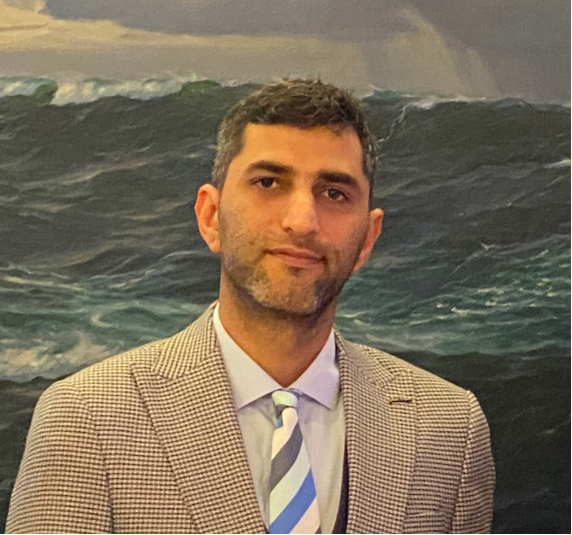
Saeid Hassankhani Dolatabadi
Saied is a PhD candidate in Mechanical Engineering at the University of Victoria (UVic), Canada, with a professional journey that began at sea and evolved into research on the future of clean maritime transport. He spent nearly six years working as a marine engineer on ocean-going vessels, where daily operational challenges shaped his perspective on energy efficiency and emissions, before completing a Master’s degree in Maritime Energy Management at the World Maritime University (WMU) in Malmö, Sweden.
At UVic, Saied’s research focuses on maritime decarbonization and the development of Green Shipping Corridors (GSCs) for British Columbia and the Pacific Northwest. His work is at the interface of alternative marine fuel evaluation, ship operations, port infrastructure, and regional energy capacity, linking corridor-level energy demand with port readiness and fuel supply capability and aims to deliver practical, evidence-based, and decision-ready insights to help ports, operators, and policymakers move from ambition to implementation.
His research is funded by the Pacific Institute for Climate Solutions (PICS) through the Ministry of Energy and Climate Solutions (MECS) of British Columbia